The Story of the First Thanksgiving Began With a Kidnapping
Video Watch this story on YouTube
In 1614, six years before the Mayflower, the place where the Pilgrims will settle is a village named Patuxet. One of the people who live there is a man named Tisquantum. The Pilgrims will later call him by a shorter name, Squanto, and that is the name most people know today.
That year two English ships are working this coast, catching and drying cod. The man in charge is Captain John Smith. Smith writes down what he sees from the water in 1614: "large corn fields, and great troops of well proportioned people." He calls the Massachusetts country "the paradise of all those parts."
Smith then sails home and leaves a second ship behind. Its captain, Thomas Hunt, has orders to carry the cod to Málaga, in Spain, and sell it there. Hunt decides he can make more money by capturing and selling people as well.
Hunt tells the people of Patuxet that he wants to trade, and twenty of them come aboard his ship. Tisquantum is one of the twenty. Hunt locks them in, and then takes seven more people from a village across the bay. He then sails for Spain.
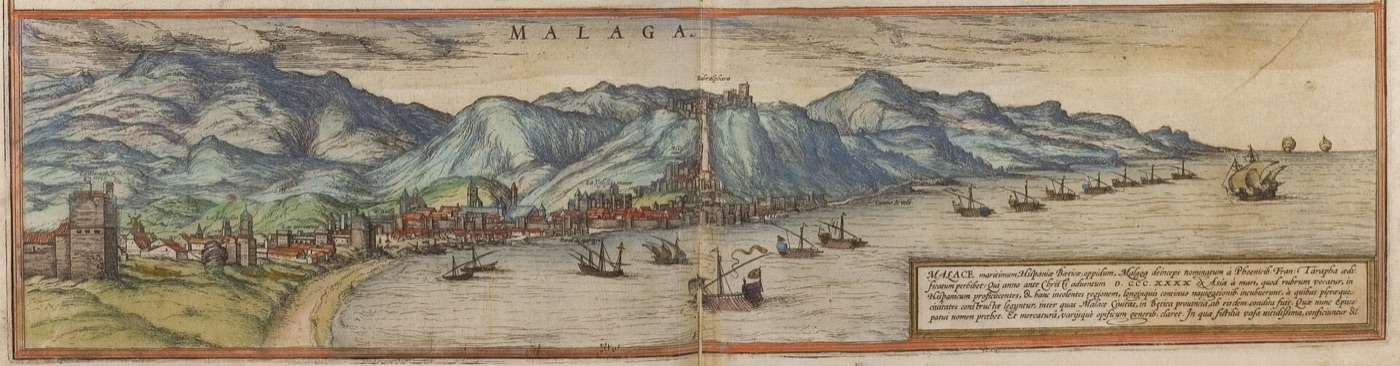
In Málaga, Hunt tries to sell his captives as slaves. Monks in the city find out and step in. The monks take many of the captives away from Hunt and set them free.

What happens to Tisquantum next is not recorded. No one wrote down how long Tisquantum stays in Spain, or how he leaves. William Bradford, who will later be governor of the Pilgrims and know Tisquantum well, writes only that Tisquantum "got away for England."
In London, Tisquantum lives in the house of John Slany. Slany is a merchant and shipbuilder, one of the London businessmen hoping to make money from new English settlements in America. By this time Tisquantum has learned to speak some English.
Slany is also treasurer of a company that runs an English settlement in Newfoundland, and Tisquantum is sent there next, probably by Slany. Tisquantum now is back on the American side of the ocean, but Newfoundland is still far to the north of his home.
In Newfoundland, Tisquantum meets an English sea captain named Thomas Dermer. Tisquantum tells Dermer about New England and persuades him that a man could make his fortune there. Dermer agrees to sail south, and to take Tisquantum with him. It is a good decision. Dermer later writes that people on that coast wanted to kill him, and would have, if Tisquantum had not "entreated hard for me."
In 1619, five years after the kidnapping, the two men travel down the New England coast in a small boat. Dermer writes a letter describing what they see. Village after village is empty. Five years earlier, Captain Smith saw corn fields and crowds of people on this coast. Now Dermer calls the villages "ancient plantations, not long since populous, now utterly void."
Then the boat reaches Patuxet. Dermer writes that he arrived at Tisquantum's home "finding all dead."
While Tisquantum was across the ocean, a disease had spread along this coast for three years, from 1616 to 1619. The disease killed most of the people living there. In Patuxet the houses are deserted and the cornfields are overgrown. Tisquantum has come home, and almost no one from his village is left alive.
With his own village gone, Tisquantum goes to live among the Wampanoag, a neighboring people whose leader is named Massasoit.
In 1620 the Mayflower arrives from England. The Pilgrims choose a place to build their settlement, and the place they choose is the empty site of Patuxet.
In March 1621 a man named Samoset walks into the settlement alone. Samoset knows some English. He tells the Pilgrims about another man, who was born in this very place, has lived in England, and speaks English better than Samoset does.
On March 22, 1621, which the Pilgrims record as "a very fair warm day," Samoset comes back and brings Tisquantum with him. The Pilgrims write down who Tisquantum is: "the only native of Patuxet, where we now inhabit."
Tisquantum and the men with him bring animal skins to trade and dried herring. They tell the Pilgrims that Massasoit, the Wampanoag leader, is close by. An hour later Massasoit appears on top of a hill facing the settlement, with sixty men behind him.
That same day, with Tisquantum helping the two sides understand each other, the Pilgrims and Massasoit agree to a treaty of peace. Massasoit goes home. Tisquantum stays with the Pilgrims.
Tisquantum arrives just as the planting season begins, and the Pilgrims need help. The seeds the Pilgrims brought from England mostly fail in this soil.
Tisquantum shows the Pilgrims how to plant corn, the local crop, and how to tend it as it grows. He warns them that these fields have been farmed for a long time and the soil is worn out. Unless the Pilgrims bury fish in the ground with the corn seed, Tisquantum tells them, the crop "would come to nothing." Then he shows them where to get the fish: in the middle of April, fish swim up the brook beside the settlement, and Tisquantum teaches the Pilgrims how to catch them.
Tisquantum also guides the Pilgrims to places they do not know, and introduces them to the trade in beaver furs. Governor Bradford writes that the Pilgrims had never seen a beaver skin before Tisquantum showed them.
Bradford calls Tisquantum "a special instrument sent of God for their good beyond their expectation."
That fall the corn is harvested. One Pilgrim, Edward Winslow, describes it in a letter home. The Pilgrims planted about twenty acres of corn, he writes, and fed the ground with fish "according to the manner of the Indians." The corn did well.
With the harvest in, the governor sends four men out to hunt birds, so that the settlement can "rejoice together." Massasoit arrives with about ninety men. For three days, Winslow writes, "we entertained and feasted." Massasoit's men go out and bring back five deer.
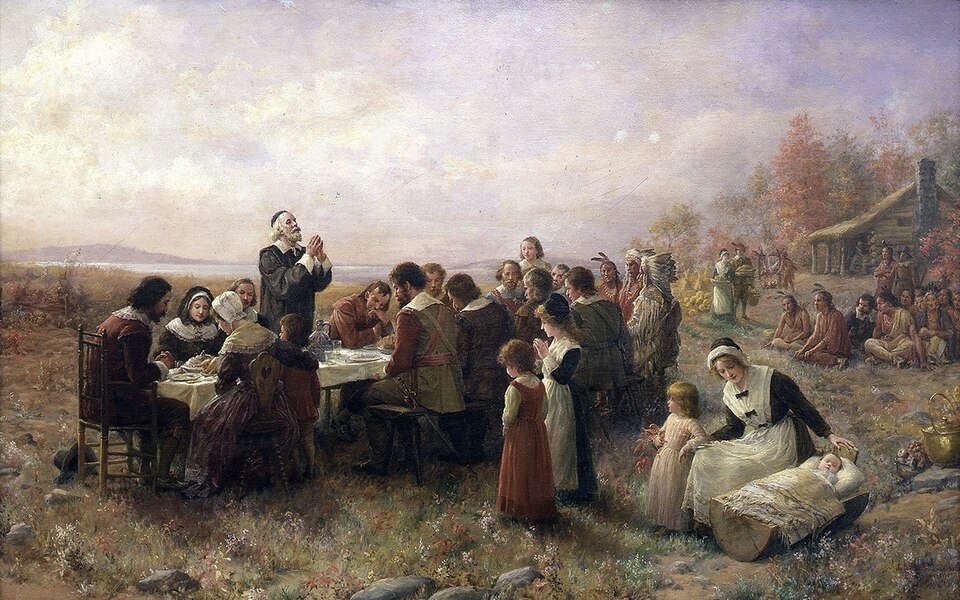

Winslow's letter is where the story of the first Thanksgiving comes from.
The harvest of 1621 does not last. Soon after it, a second ship, the Fortune, arrives from England with 35 more settlers and no food for them. The Pilgrims have to share what they grew. Through the winter and spring of 1622 the whole settlement lives on half rations.
So in the fall of 1622, Governor Bradford sets out by ship to trade for more food. He relies on Tisquantum to pilot the ship around Cape Cod, through dangerous shallow water.
At a place called Manamoyack, on Cape Cod, Tisquantum falls sick. Bradford calls the sickness an "Indian fever." Bradford stays beside him for several days. Tisquantum asks Bradford to pray for him, and leaves his belongings to his English friends, in Bradford's words "as remembrances of his love."
Tisquantum dies there in November 1622, twenty months after he first walked into the settlement. Bradford writes that the Pilgrims "had a great loss."
The Pilgrims had a harvest to give thanks for because one man could talk to them and showed them how to grow food. That man could talk to them because an English captain had kidnapped him seven years earlier. And the Pilgrims had cleared fields to plant because his village had died while he was gone.
The Thanksgiving harvest story begins with a kidnapping.
Sources
- Wikipedia, "Squanto": https://en.wikipedia.org/wiki/Squanto
- William Bradford, "History of Plimoth Plantation" (Internet Archive): https://archive.org/stream/bradfordshisto00brad/bradfordshisto00brad_djvu.txt
- Plimoth Patuxet Museums, "Tisquantum": https://plimoth.org/yath/unit-3/tisquantum
- Marr and Cathey, "New Hypothesis for Cause of Epidemic among Native Americans, New England, 1616-1619", Emerging Infectious Diseases, February 2010: https://wwwnc.cdc.gov/eid/article/16/2/09-0276_article
- Library of Congress, "Letter of Thomas Dermer" (printed 1841): https://www.loc.gov/item/11022272/
- Library of Congress, "The journal of the Pilgrims at Plymouth" (1848 reprint of Mourt's Relation): https://www.loc.gov/item/40024866/
- Library of Congress, Alexander Young, "Chronicles of the Pilgrim fathers" (1841): https://www.loc.gov/item/01012110/
- Internet Archive, John Smith, "A Description of New England" (1616, in the 1865 reprint): https://archive.org/details/descriptionofnew00smit
Picture shown with this story in the list of stories: The German Kali Works, New York, 1911. Public domain, via Wikimedia Commons.
