Why Is It Called Black Friday? Stores Did NOT Invent It — Here's Who Did
Every November, on the day after Thanksgiving, America goes shopping, and the day has a name: Black Friday. You have probably heard why. You are probably thinking that's the day the stores finally turn a profit, and their account books go from red ink to black. That may be right, but that is not where the name originated. The stores did not invent it. They actually hated the name, and for more than twenty years they wanted it gone. The name actually originated from policemen, trying their best to control heavy automobile traffic. The earliest record of the police calling it "Black Friday" is from Philadelphia, in 1960, and they meant nothing kind by it. So how did a policeman's name for a traffic jam end up on the stores' own sale signs so many years later?
The story begins in Philadelphia, in the late 1950s. On the Friday after Thanksgiving the schools are closed, the Christmas shopping season opens, and Santa Claus takes his chair in the big department stores downtown. Every child in the city wants to see him. In most years there is more. The Army-Navy football game is in Philadelphia that weekend, and their fans begin to arrive on Friday. In 1958 that game draws a hundred and two thousand people. Shoppers and football crowds pour into the same downtown streets, and the traffic snarls. For the city's traffic police, it is the worst day of their year.
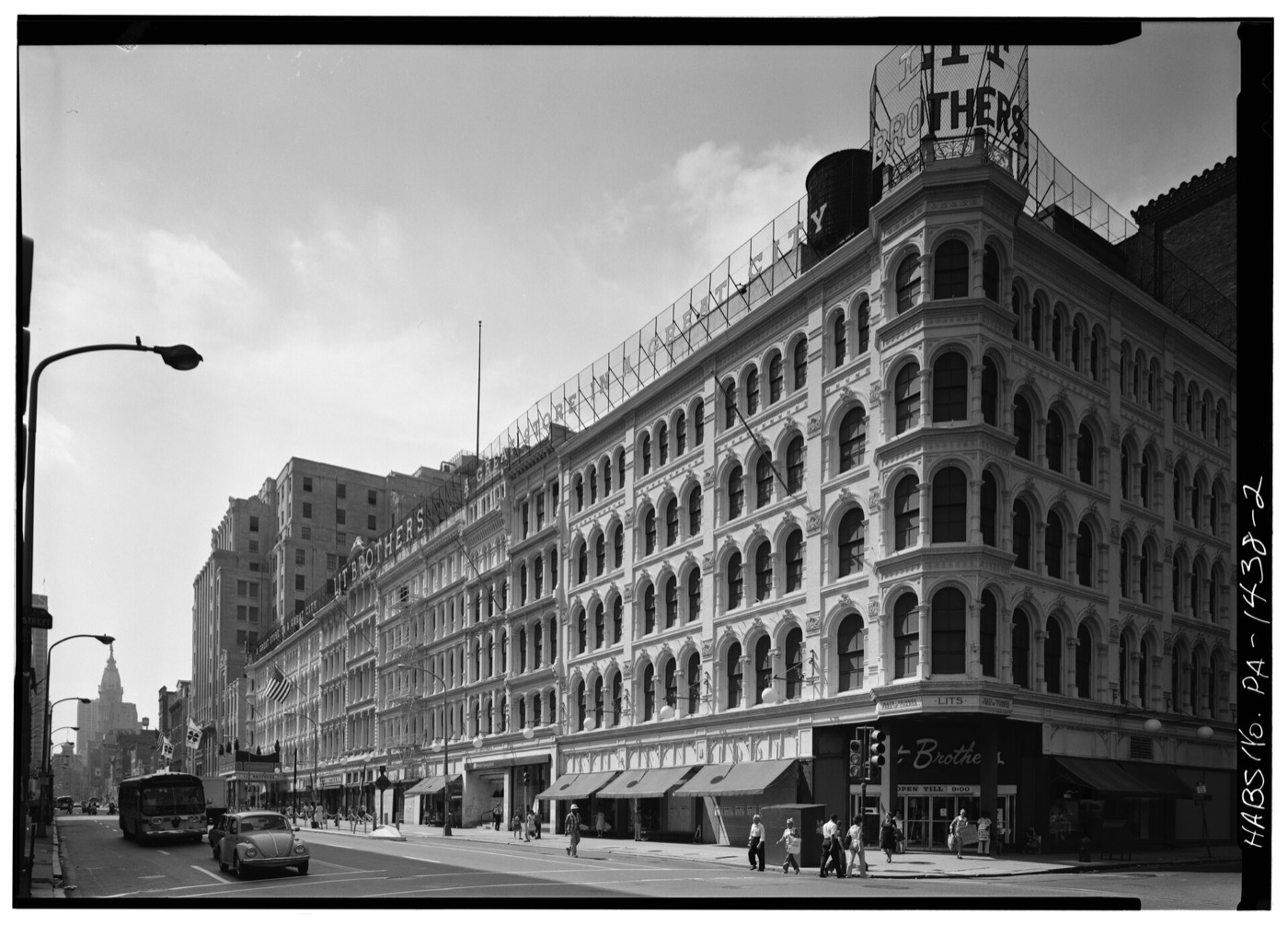
Every year the police department throws everything it has at that Friday. In 1958 a police inspector commands four hundred and fifty policemen downtown. No traffic officer is allowed the day off, and the shifts run twelve hours. Even the police band is ordered into the streets, and a trombone player can be seen directing traffic. Officers stand outside the parking garages, because drivers line up at the "lot filled" signs and block the street behind them. The newspapers call the day Big Friday. The traffic police have another name for it. By 1960 they are calling it Black Friday. Those words had been printed before, in 1951, when a magazine for factory managers used them for the day workers called in sick after Thanksgiving, but there is no known connection other than a name to this story.
Later in 1960 the name "Black Friday" gets out. That Thanksgiving week, police officials warn of record traffic jams on what they call "Black Friday", and the radio keeps repeating a plea from the mayor: leave your cars at home. A trade newspaper reports that the downtown stores are bitter. To them, every warning about traffic or an ominous description of Black Friday leads to customers who stay away. One newspaper goes further. Joseph Barrett is a police reporter for the Evening Bulletin, and by his account he and another reporter, Nathan Kleger, borrowed the police name and put it in a front-page story.
The store owners complain loudly to the police commissioner, Albert Brown. Barrett starts to worry that he has made a mistake, so he asks a chief inspector to confirm that "Black Friday" really is the police name. The inspector, joking, will only say that Black Friday means the Valentine's Day massacre in Chicago. In 1961 the stores take their problem to Abe Rosen, a former newspaperman who handles public relations for the city. Rosen's advice is to turn Black Friday and Black Saturday into Big Friday and Big Saturday. The commissioner then sends out a press release calling the day Big Friday.
For a while it seems to work. Rosen tells a public relations newsletter that the weekend's business was so good, the store owners are giving downtown Philadelphia "a starry-eyed new look". The Philadelphia Inquirer goes on printing "Big Friday" in its headlines as late as 1966. But the police name still will not die. By Barrett's account, he and Kleger keep printing "Black Friday" in the Bulletin. Police in Rochester, New York, are using it too. And in 1966 a Philadelphia businessman explains it in a stamp collectors' magazine. Black Friday, he writes, is the name the police department has given the day, and "It is not a term of endearment to them."
By 1970 the Inquirer is printing the police name too. On the day after Thanksgiving one of its columnists goes downtown. At Twelfth and Market Streets he finds a traffic patrolman, Stanley Makarewicz, and asks him why policemen and cab drivers call it Black Friday: "It is supposed to be the worst traffic day out of the whole year," the policeman responds. Then the columnist calls on Reeves Wetherill, in his office behind the toy department at Wanamaker's. Wetherill has run the store's publicity since 1960, the year the name got out. "It's called Black Friday, but no one knows why," he says, smiling. The only thing black about it, he suggests, is the ink in the store's ledgers.
Slowly, the new explanation spreads. In 1981 an Inquirer reporter asks why the biggest day of the retailers' year has such a dark name. Grace McFeeley, of the Cherry Hill Mall in New Jersey, has an answer: it is a day retailers make profits, or black ink. The next year ABC's evening news tells the whole country that some merchants call it Black Friday because the day can mean the difference between red ink and black in their ledgers. Yet the store owners still hate the name. In 1985 Irwin Greenberg, the chairman of a department store chain, calls it "a phrase that's sinful and it's disgusting", and the retail trade's national association states that Black Friday is "not an accepted term in the retail industry".
Sometime after 1985, the stores stopped fighting the name and began to print it. The name they had resisted for twenty-five years became part of their own marketing, and the traffic police slowly dropped out of the story. Joseph Barrett tried to put them back, however. In 1994 he wrote down what he remembered from that time: "it was a traffic cop who started it, the guy who directed traffic with a semaphore while standing on a small wooden platform". Barrett liked to write, he once said, about people "who would otherwise be anonymous". Barrett died in 2012, at the age of ninety. His obituary never mentions Black Friday. But there is no disagreeing today that those two words are on every store's own sale signs starting Thanksgiving week. However, they belonged first to a policeman complaining about traffic.
Sources
- Joseph P. Barrett, "This Friday Was Black with Traffic", Philadelphia Daily News, 25 November 1994, reprinted by The Philadelphia Inquirer on 22 November 2022 as "Philly's role in the naming of 'Black Friday' started with Center City traffic": https://www.inquirer.com/archive/black-friday-thanksgiving-origins-history-philly-20221122.html
- Ben Zimmer, "The Origins of 'Black Friday'", Word Routes, 25 November 2011 (quotes Public Relations News, 18 December 1961, p. 2): https://www.vocabulary.com/articles/wordroutes/the-origins-of-black-friday/
- Dave Wilton, "Black Friday / Cyber Monday", Wordorigins.org, 21 November 2023 (quotes Women's Wear Daily, 28 November 1960, and Factory Management and Maintenance, November 1951 and February 1952): https://wordorigins.org/big-list-entries/black-friday-cyber-monday
- Bonnie Taylor-Blake, American Dialect Society list, 24 April 2008 (quotes The Philadelphia Inquirer of 28 November 1981, 24 November 1984 and 30 November 1985, and The American Philatelist, January 1966): https://listserv.linguistlist.org/pipermail/ads-l/2008-April/081342.html
- Bonnie Taylor-Blake, American Dialect Society list, 19 August 2011 (on Barrett's column): https://listserv.linguistlist.org/pipermail/ads-l/2011-August/111695.html
- David Mikkelson, "How Did 'Black Friday' Get Its Name?", Snopes, 30 November 2013: https://www.snopes.com/fact-check/black-friday-2/
- Wikipedia, "Black Friday (shopping)", "Army–Navy Game" (game dates) and "Cherry Hill Mall": https://en.wikipedia.org/wiki/Black_Friday_(shopping), https://en.wikipedia.org/wiki/Army%E2%80%93Navy_Game, https://en.wikipedia.org/wiki/Cherry_Hill_Mall
- Factory Management and Maintenance, November 1951 and February 1952, scans at the Internet Archive: https://archive.org/details/sim_factory_1951-11_109_11, https://archive.org/details/sim_factory_1952-02_110_2
- Barry Popik, "Black Friday (Big Friday)" (transcriptions of the Inquirer, Daily News, Sunday Bulletin, Women's Wear Daily, Public Relations News and ABC, 1957 to 1994): https://barrypopik.com/blog/black_friday_big_friday
- John F. Morrison, "Joseph Barrett, 90, longtime reporter at the Bulletin", Philadelphia Daily News, 20 June 2012: https://www.inquirer.com/philly/obituaries/20120620_Joseph_Barrett__90__helped_alcoholics__told_people_s_stories.html
- "Abe S. Rosen, 94; reporter, PR executive, city official", The Philadelphia Inquirer, 4 October 2011: https://www.inquirer.com/philly/obituaries/20111004_Abe_S__Rosen__94__reporter__PR_executive__city_official.html
- "Reeves Wetherill scrapbooks", Philadelphia Area Archives, Penn Libraries: https://findingaids.library.upenn.edu/records/SMREP_PHM.01
- The Associated Press, 23 November 2023, as carried by Fortune (quotes its 1975 report): https://fortune.com/2023/11/23/black-friday-evolution-2023
- NPR, "Why Black Friday Has Dark Roots", 21 November 2012: https://www.npr.org/sections/thetwo-way/2012/11/21/165662876/why-black-friday-has-dark-roots
- WHYY, "The marathon known as 'Black Friday' actually has its roots in Philadelphia": https://whyy.org/articles/the-marathon-known-as-black-friday-actually-has-its-roots-in-philadelphia
- Bonnie Taylor-Blake, American Dialect Society list: 5 August 2009 (the 1951 find), https://listserv.linguistlist.org/pipermail/ads-l/2009-August/092018.html; 5 May 2011 (Public Relations News), https://listserv.linguistlist.org/pipermail/ads-l/2011-May/109292.html; 20 November 2017 (Barry Popik's finds), https://listserv.linguistlist.org/pipermail/ads-l/2017-November/150062.html
- Ben Zimmer forwarding Barry Popik, American Dialect Society list, 30 November 2014 (Rochester, 1961): https://listserv.linguistlist.org/pipermail/ads-l/2014-November/135115.html
Picture shown with this story in the list of stories: Dick Swanson, September 1973, cropped. Public domain, U.S. National Archives, via Wikimedia Commons.
